

The Sexual Revolution
The Cambrian explosion, also known as the Cambrian radiation, was an event that occurred approximately 541 million years ago.
In the Cambrian period, most major animal phyla appeared in the fossil record. It lasted for about 13–25 million years and resulted in the divergence of most modern metazoan phyla. All the elements, everything that exists on this planet, is made of the same basic stuff of the one hundred or so elements. Living things are composed of only a few of them..
When you return to the bare facts of life, life doesn't need much. Life is made of four basic elements.
C H O N
Carbon - Hydrogen - Oxygen - Nitrogen.
Okay, some sulfur and phosphorus, but this is life CHON, and those are the elements that contribute to the LAND, SEA, AIR, and the LIFE that we see on Earth. Elements and compounds are the beginning of life. How do we get from elements and compounds to a unit of living matter, which is a cell?.
The Cambrian Period marks an important point in the history of life on Earth; it is the time when most of the major groups of animals first appear in the fossil record. This event is sometimes called the "Cambrian Explosion " because of the relatively short time over which this diversity of forms appears. Before the Cambrian explosion, most organisms were simple, composed of individual cells occasionally organized into colonies. As the rate of diversification subsequently accelerated, the variety of life began to resemble that of today. Almost all present animal phyla appeared during this period.
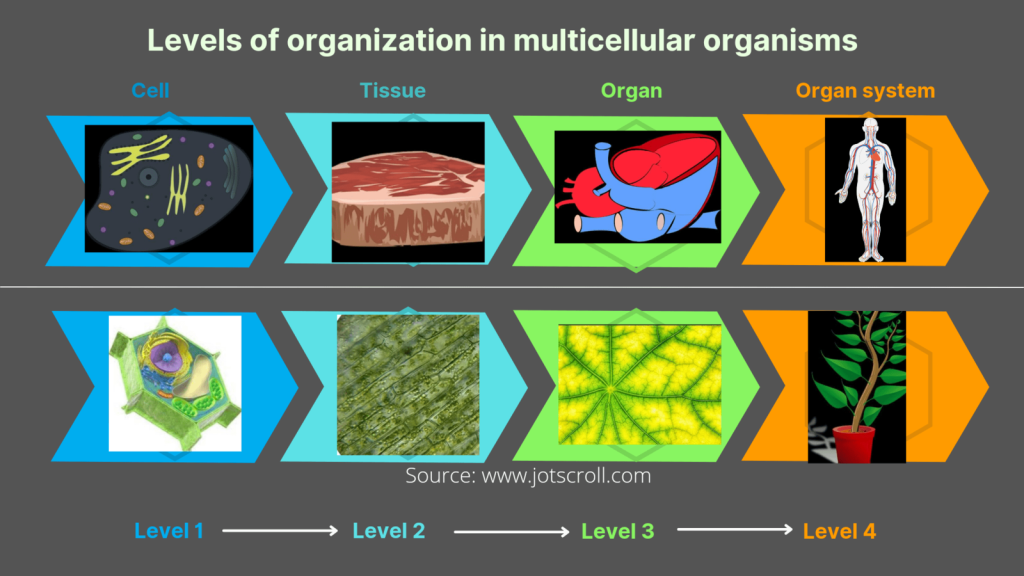
A CELL
A cell is a fundamental unit of life, a sack of enzymes. The engine room of life. A microcosm of life itself. The process that turns organic compounds in a microcosmic cell is so convoluted that, as yet, nobody understands it completely.
D. N. A.
The Physical Existence.
There is a section missing on how life began. Energy is the key to all these interactions; it's the key to growth, it's the flow of energy that creates life. The four elements with a bit of energy will create a compound called protein. A protein is a string of amino acids that are chemically very firmly locked together. It's a very tough protein, a very tough compound. These proteins are made of sugars, phosphate, and the chemicals Adenine, Waning, Tydasien, Thymine.
This is called D N A.
The blueprint for creating all living things. This is where the road ends, because how do the animate become animated? The first life, simple cells called Prokaryotes, at the same time, every current being on EARTH today shared a common ancestor. Photosynthesis begins. Oxygen first enters the atmosphere as a waste product of the process.
The first complex cells with a nucleus, called Eukaryotes. US, Scientists believe this may have been a miraculous evolutionary freak event. It amazes me how much of the last 3,6 million years on EARTH were spent in the Dark Green. Do you understand how boring the dark green zone is ?. It’s basically bacteria in the ocean and that’s it 5/6 of the time Earth has had life on it, that life has been only microbes.
We need to remember that for roughly 80% of the 3.6 billion years that life has been on Earth, there was only a single-celled organism in existence. This was the dominant form of life on this planet for 85% of the history of life. Microbe life has dominated the earth for more than 3.6 billion years; it's been the dominant force of life on earth throughout its entire history. So it’s hard to picture how a microbe evolved into a fish It
Earth 3.6 Billion years old
So, how do single-cell organisms develop into multicell organisms from oxygen eliminating to oxygen breathing? It happens because of lots of mistakes, copying errors, and mutations. If it were not for the blundering single-cell organisms, animals like man might never have appeared on earth to try to solve the puzzle of how life began.
THE CHANGE OXYGEN.
Mono Lake
There is a lake in California called Mono Lake; most scientists believe that the early Earth resembled this lake. The lake consisted of sodium carbonate, rather than sodium chloride. That makes this lake very caustic. It's toxic to many forms of life. You couldn't drink the water because you would die.
These waters are rich in arsenic. And yet life not only exists here, it thrives. Mono Lake's strange, toxic environment puts off most living things. Neither fish nor amphibians can live here, but highly specialized creatures that thrive in certain extreme conditions, we call them extreme of file love it here.
If you look closely at the lake, you would notice bubble streams coming up as well, and this is Methane, Butane, Artane, Propane: these are all explosive mixtures within the boiling pools of Mono Lake is evidence of how life may have sustained itself on the nutrient-poor planet, but extreme microorganisms adapted to the extremes of temperature.
Boiling pools of Mono Lake
Within the boiling pools of Mono Lake is evidence of how life may have sustained itself on the nutrient-poor planet, but extreme microorganisms adapted to the extremes of temperature. This is the possibility of how life got going and survived. How could senseless, brainless single-cell organisms do such a clever thing as to change our planet as it is today, and why would they want to? For most life on earth today, the environment on a young planet, harsh and virtually devoid of oxygen, would have been literally suicidal.
For any life more complicated than a single-cell organism to have survived the environment would need to have changed, but how? Early life on Earth survived in the very simple form of single-cell organisms, without brains, hands, or eyes. The first earthling spread over the entire planet, possibly through the ocean or the atmosphere. These hardy little cells harnessed the energy and made copies of themselves over billions of years.
Oxygen-Free Earth
When billions of single-cell organisms began to release oxygen as the sun started to heat up. The otherwise almost oxygen-free Earth gradually develops an oxygen-rich atmosphere. Life on Earth altered its environment, creating a situation conducive to multicelled creatures even before there was any to experience it. So how do single-cell organisms develop into multicell organisms, from oxygen eliminating to oxygen breathing? It happens because of lots of mistakes, copying errors, and mutation: if it were not for the blundering single-cell organisms, animals like man might never have appeared on earth to try to solve the puzzle of how life began.
We understand Earth's early environment and how, over time, single-cell organisms changed that environment to one that is oxygen-rich. All of this has been learned. The next challenge is to decipher how life evolved from simple single-cell organisms to complex multicelled organisms. Throughout the time of life, 3.6 billion years, single cells continued to grow by duplicating themselves and through mutation. The moment single cells changed to multicelled oxygen creatures, something happened that had never happened before, and that is the introduction of SEX.